Sort by:
1836 products
1836 products
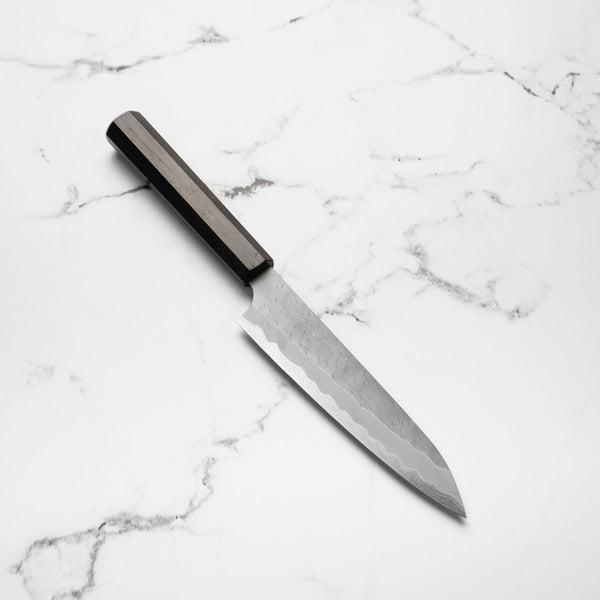
Specifications
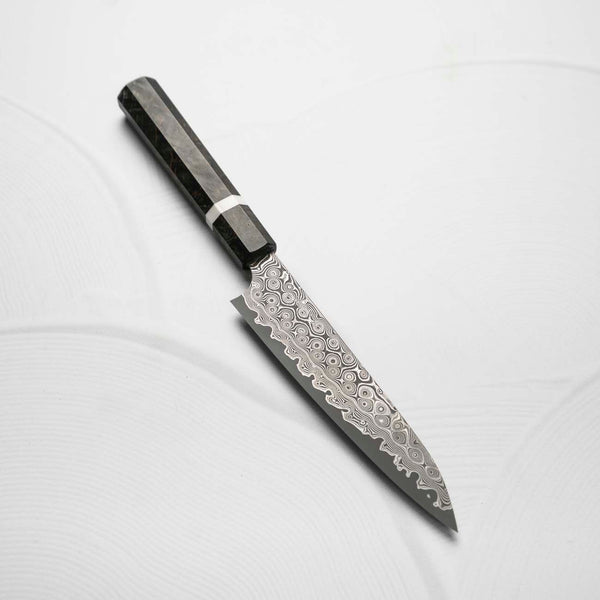
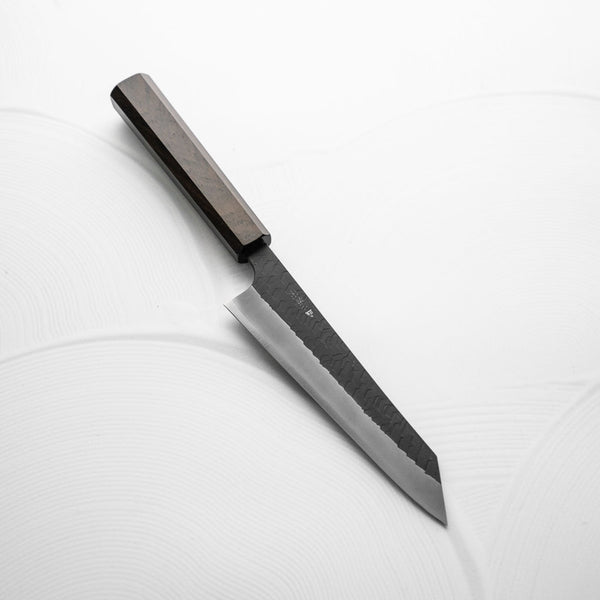
| Style: | Petty |
| Blade Length: | 150mm |
| Overall Length: | 275mm |
| Weight: | 72g |
| Blade Height @ Heel: | 30mm |
| Bevel: | Double Bevel |
| Spine Thickness @ Heel: | 1.8mm |
| Spine Thickness @ Mid: | 1.6mm |
| Spine Thickness 1cm from tip: | 0.8mm |
| Blade Material: |
|
| HRC: | 61-62 |
| Handle: | Octagonal Dyed Maple with White Spacer |
*Please ensure the correct sized saya is chosen before purchasing, a list of knives that fit this saya is linked below, Chefs Edge is not responsible if the wrong sized saya is selected*
Depending on the size of the available saya pins at the time of purchase the saya pin hole may need to be redrilled by our warehouse team. This may cause a cosmetic imperfection around the saya pin hole but has no negative affect on the function of the saya.
| Saya Style: | Gyuto with pin |
| Opening Height: | 52mm |
| Internal Length: |
To suit a 240mm Gyuto |
| External Length |
290mm |
| Weight: |
58g |
| Saya Material: | Birch Wood |
| Knives this saya suits | Click here to view knives |
*Please ensure the correct sized saya is chosen before purchasing, a list of knives that fit this saya is linked below, Chefs Edge is not responsible if the wrong sized saya is selected*
Depending on the size of the available saya pins at the time of purchase the saya pin hole may need to be redrilled by our warehouse team. This may cause a cosmetic imperfection around the saya pin hole but has no negative affect on the function of the saya.
| Saya Style: | Santoku/Bunka with pin |
| Opening Height: | 50mm |
| Internal Length: |
To suit a Bunka or Santoku 165mm |
| External Length |
220mm |
| Weight: |
29g |
| Saya Material: | Birch Wood |
| Knives that suit this saya | Click here to view knives |
*Please ensure the correct sized saya is chosen before purchasing, a list of knives that fit this saya is linked below, Chefs Edge is not responsible if the wrong sized saya is selected*
Depending on the size of the available saya pins at the time of purchase the saya pin hole may need to be redrilled by our warehouse team. This may cause a cosmetic imperfection around the saya pin hole but has no negative affect on the function of the saya.
| Saya Style: | Gyuto with pin |
| Opening Height: | 47mm |
| Internal Length: |
To suit a 210mm Gyuto |
| External Length |
250mm |
| Weight: |
48g |
| Saya Material: | Birch Wood |
| Knives this saya fits | Click here to view knives |
Specifications
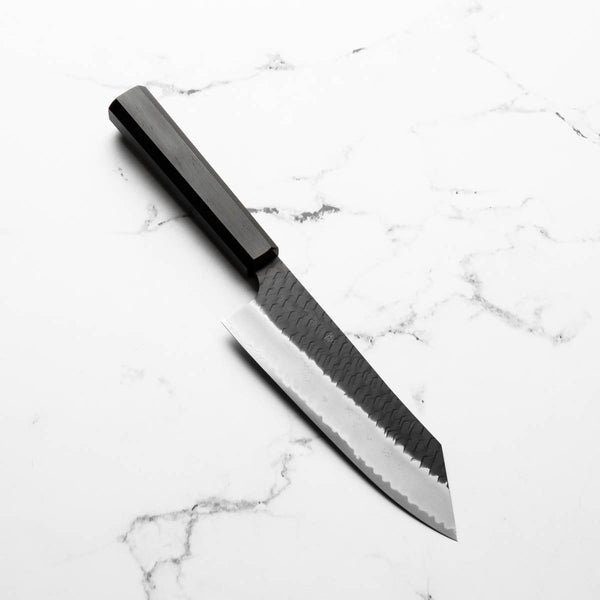
| Style: | Kiritsuke Cleaver |
| Blade Length: | 185mm |
| Overall Length: | 340mm |
| Weight: | 331g |
| Blade Height @ Heel: | 80mm |
| Bevel: | Double Bevel |
| Spine Thickness @ Heel: | 3.2mm |
| Spine Thickness @ Mid: | 2.8mm |
| Blade Material: | White 2 Core, Soft Iron Clad |
| Handle Material: | Octagon Ebony w/Blonde |
| HRC: | ~63 |
Specifications
| Style: | Gyuto |
| Blade Length: | 180mm |
| Overall Length: | 365mm |
| Weight: | 165g |
| Blade Height @ Heel: | 47mm |
| Bevel: | Double Bevel |
| Spine Thickness @ Mid: | 1.4mm |
| Blade Material: | Shirogami 1 (White) Core, Stainless Clad |
| HRC: | 61-62 |
| Handle Material: | Octagon Ebony |
Knife Information
1894- Mr. Tasaburo Shigematsu, a hardware wholesaler, introduced a new pocket knife with its blade and sheath folded by installing a small handle “Chikiri (tail)” on the blade, while inspired by the knife he brought back from Kagoshima.
He named it “Higonokami Knife” because many of his customers were in Kumamoto area (formally Higo country), which turned out to dramatically increase his sales. The blades have gradually changed their shapes. Unlike single-edged knives, the double-edged blades (V-shaped cross section) were in those days considered common. The earlier blades had a sharper tip (shape of a bamboo leaf), but now they have square shapes. The sheaths had a vertically folding style and a cross folding style, now the vertical one has to be custom made.
In 1911, at the First Kobe Export Articles Competitive Exhibition, Crown Prince (later Emperor Taisho) liked Higonokami on display very much and bought one, which is said to have helped its fame further spread.
The Higonikami is a fantastic traditional utility knife at a low cost.
Specifications
| Style: | Higonokami |
| Blade Length: | 90mm |
| Weight: | 71g |
| Bevel: | Double Bevel |
| Blade Material: | Aogami (Blue) Steel |
| Handle Material: | Brass w/Birch Overlay |
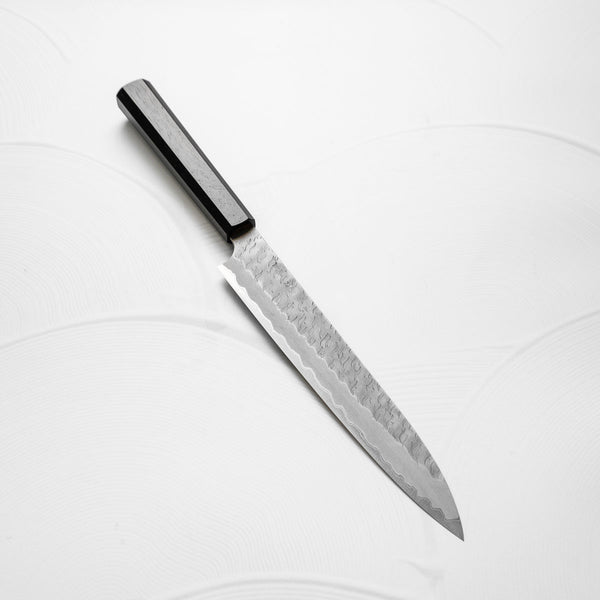
Specifications
| Style: | Kiritsuke |
| Blade Length: | 220mm |
| Overall Length: | 355mm |
| Weight: | 158g |
| Blade Height @ Heel: | 46mm |
| Bevel: | Double Bevel |
| Spine Thickness @ Heel: | 2.2mm |
| Spine Thickness @ Mid: | 1.8mm |
| Spine Thickness 1cm from tip: | 0.8mm |
| Blade Material: | |
| Handle Material: | Octagon Ebony |
| HRC: | 62 |
Stando's smaller sibling - Petite Stando. Light and quick, Petite Stando is our answer to the offset plating tweezer. At 8 inches it's comfortable nestled on the front of your apron, and ready to help plate on the pass. You'll find sharpened tips and a balanced tension between the tongs, allowing for precise placement and a strong grip.
Form-
We ditched the bland and clinical look of tongs, and replaced it with a soft streamlined shape. The namesake feature, a curved stand in the middle of the tool provides a wide surface area for finger placement and grip. The stand also keeps the tips elevated off the ground while not in use. Each piece is stamped, etched, and finished by hand at Mr. Ando’s workshop.
Origin-
Niigata, Japan
Material-
18/8 Japanese stainless steel
Length-
8 inches
Cleaning-
Hand-wash only, please.
Handling-
Petite Stando's tips is sharp out of the box. If you would like them less sharp, a few passes on medium-grit sandpaper or something similar will do the trick.
Packaging-
Packaging is constructed with recycled chipboard
FAQs
What is the difference between Stando and Petite Stando?
Stando is a 10" all-purpose tool designed to act like a more nimble tong. Stando has rounded tips and is comfortable anywhere you would use tongs like stirring noodles, grilling, sautéing veg, or flipping chicken. Petite Stando is 8" and has pointed tips and is a more dedicated plating tweezer, designed for delicate tasks like garnishing or handling small things.
I don't work in a restaurant, why should I buy Stando?
Tweezers have long been a secret weapon in pro kitchens. Where clunky collapsible tongs can rip or tear food and feel like cooking with two giant thumbs, tweezers are delicate and nimble allowing an opportunity to interact with your food with more control and intimacy. In addition to being a great cooking companion, Stando also works well as a serving utensil - from tinned fish to charcuterie boards and salads.
Specifications
| Style: |
Gyuto |
| Blade Length: | 240mm |
| Overall Length: | 386mm |
| Height @ Heel: | 53.5mm |
| Spine Thickness @ Mid: | 2.2mm |
| Weight: | 224g |
| Blade Material: | VG10 Core, Tsuchime Damascus Clad |
| Handle Material: | Octagon Ebony |
| HRC: | ∼61 |
Specifications
| Style: | Sujihiki |
| Blade Length: | 270mm |
| Overall Length: | 420mm |
| Weight: | 171g |
| Blade Height @ Heel: | 40mm |
| Bevel: | Double Bevel |
| Spine Thickness @ Heel/Mid: | 2mm/2mm |
| Blade Material: | VG-10W Rainbow Damascus Stainless Clad |
| Handle Material: | Dyed Maple |
| HRC: | ~61 |
Specifications
| Style: | Sakimaru Sujihiki |
| Blade Length: | 270mm |
| Overall Length: | 418mm |
| Height @ Heel: | 41mm |
| Spine Thickness @ Mid: | 2mm |
| Weight: | 192g |
| Blade Material: | SG2 Core, Stainless Kurouchi Tsuchime Clad |
| Handle Material: | Mono Ebony |
| HRC: | ∼63 |
Specifications
| Style: | Sujihiki |
| Blade Length: | 270mm |
| Overall Length: | 420mm |
| Weight: | 171g |
| Blade Height @ Heel: | 40mm |
| Bevel: | Double Bevel |
| Spine Thickness @ Heel/Mid: | 2mm/2mm |
| Blade Material: | VG-10W Rainbow Damascus Stainless Clad |
| Handle Material: | Dyed Maple |
| HRC: | ~61 |
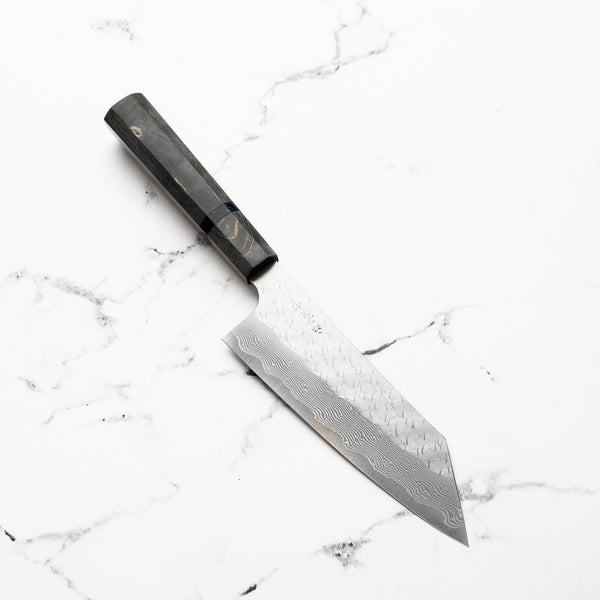
Hatsukokoro Yorokobi Kurouchi SLD Damascus Tsuchime Santoku 180mm - Carbon Fibre
£515.00 GBP
Unit price perHatsukokoro Yorokobi Kurouchi SLD Damascus Tsuchime Santoku 180mm - Carbon Fibre
£515.00 GBP
Unit price perAccessories Information
The GlassStone series of sharpening stones uses a revolutionary design to provide great usability within a thin package formed from a combination of glass layers. The conventional image is that sharpening stones are large and heavy, but GlassStones are not only thin and light, but also strong, as layers of tempered glass are stuck together. GlassStones therefore have strong resistance to cracking or sudden breakage caused by external shocks such as being dropped.
Shapton stones do not need to be soaked except the very first time after purchase. We do recommend that on first use, you pre-soak the stone in water for five to six minutes to secure even smoother sharpening. Shapton stones do not need a Nagura Stone, and lapping with a Nagura Stone will leave the surface rough and ragged.
Chef's Edge
We pride ourselves on offering an unparalleled selection of Japanese knives. From the versatile Gyuto and the precise Santoku to specialized knives like the Nakiri and Yanagiba, each knife is handpicked for its quality and performance.